Why Are Groceries So Expensive Right Now?
The real reasons grocery prices keep climbing, broken down by cause.
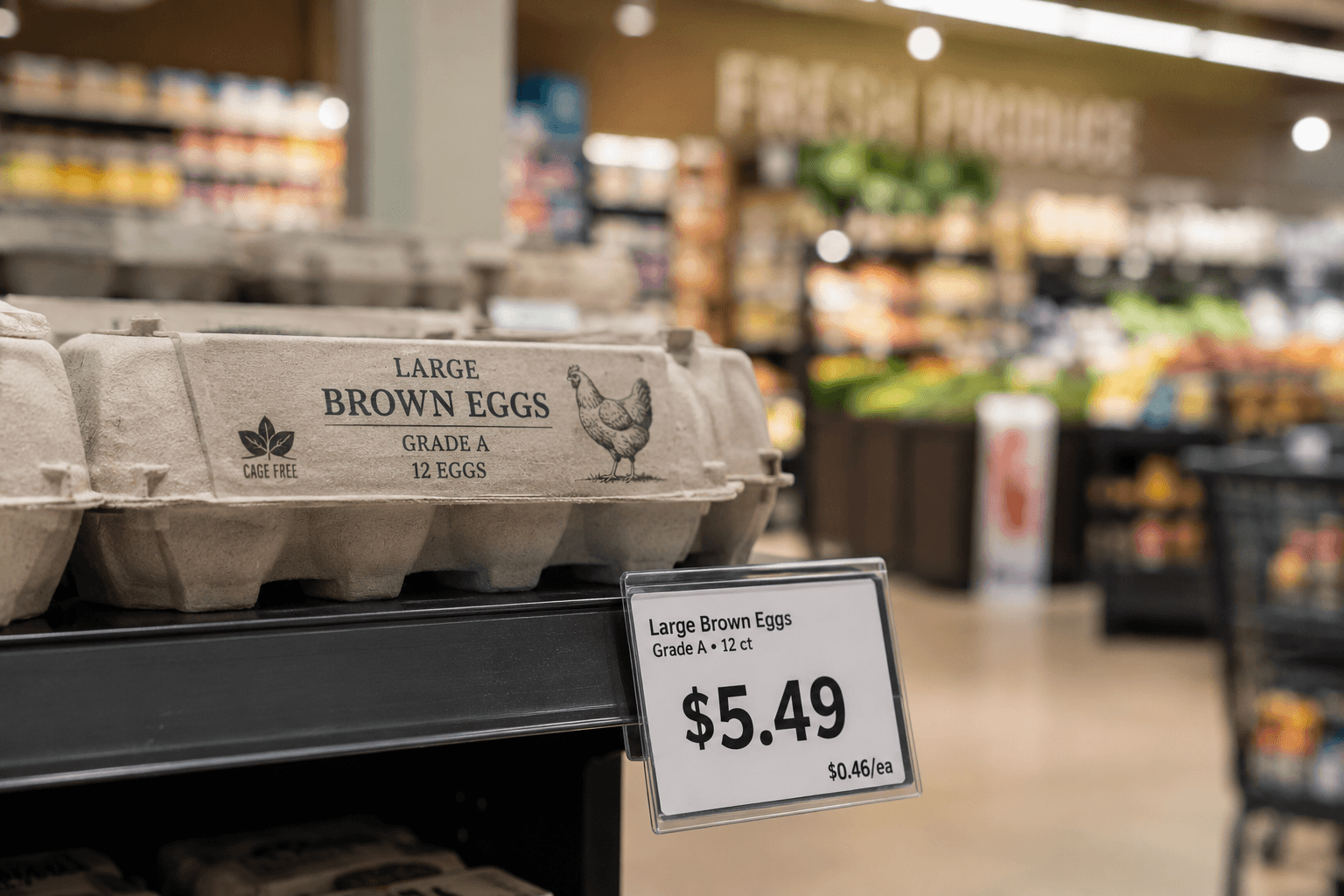
Groceries are more expensive right now mainly because of a combination of general inflation, higher costs to grow and transport food, and category-specific shocks like disease outbreaks affecting livestock. It's not one single cause, and it doesn't affect every item the same amount.
Here's what's really driving the increase, broken down by category.
Why are groceries so expensive right now?
Grocery prices have risen due to a mix of overall inflation, higher input costs (fuel, packaging, labor), extreme weather affecting crop yields, and disease outbreaks disrupting specific supply chains like eggs and poultry. Some of this is temporary and tied to a specific event; some of it reflects a permanent shift in the baseline cost of producing and moving food.
How much have grocery prices actually risen?
Food-at-home prices, meaning groceries you buy and cook yourself (as opposed to eating out), have risen about 25% over the past five years, according to federal price-tracking data. In plain terms, that means a basket of groceries that cost $100 in June 2021 costs roughly $125 today. Someone who spent $300 a month on groceries in 2021 would need about $375 a month today for the same basket, an extra $900 a year just from rising prices.
For reference, the government's grocery price index sat at 257.058 in June 2021 and had climbed to 321.446 by June 2026, according to FRED.
Source: FRED, BLS Food at Home CPI (CUSR0000SAF11), June 2021 vs. June 2026
What's driving the increase, category by category?
Category | Main driver |
|---|---|
Eggs | Avian flu outbreaks reducing flock sizes |
Beef | Smaller cattle herds, years-long rebuild cycle |
Produce | Drought and extreme weather affecting yields |
Packaged goods | Packaging, transport, and labor costs |
Coffee, cocoa | Global supply constraints and climate impact on growing regions |
Will grocery prices go back down?
Rarely, for most categories. Grocery prices are historically sticky: even when the underlying cause (like an avian flu outbreak) resolves, prices tend to plateau at the new higher level rather than fall back down, since retailers rarely reverse price increases once consumers adjust to them.
How do you spend less even while prices are high?
The same core strategies apply regardless of the overall price level: reduce food waste, plan meals around what's on sale, and track spending so increases get caught early instead of discovered at the end of the month. Tallycart makes that last part automatic by flagging category-level changes over time instead of leaving you to notice a slow creep on your own. [See the full guide: How to Save Money on Groceries]


Frequently Asked Questions
Are grocery prices going up in 2026?
Yes, food-at-home prices have continued rising through 2026, though the rate of increase varies month to month and by category.
Which groceries have gotten the most expensive?
Eggs and beef have seen some of the sharpest increases in recent years, driven by avian flu and smaller cattle herds specifically, rather than general inflation alone.
Do grocery stores mark up prices more than they used to?
Retail margins vary by store and category, and rising shelf prices mostly reflect higher supplier, transport, and labor costs passed down the chain rather than retailers pocketing a bigger cut. Some categories have seen margin growth alongside cost increases, which is part of why the exact split between "costs went up" and "markup went up" is hard to pin down with one clean number.
How do you know if it's actually costing you more?
Comparing this month's grocery bill to last year's from memory doesn't work, since price increases happen gradually enough to blend into the background. Tallycart tracks your spending by category over time, so you can see exactly how much more you're paying now versus six months ago.